

Table of Contents
Introduction
India’s private security sector is evolving as businesses face changing safety requirements, growing infrastructure needs, and increasing expectations for professional security management. From corporate offices and manufacturing facilities to hotels, warehouses, and residential societies, organizations need security solutions that go beyond the traditional role of a security guard.
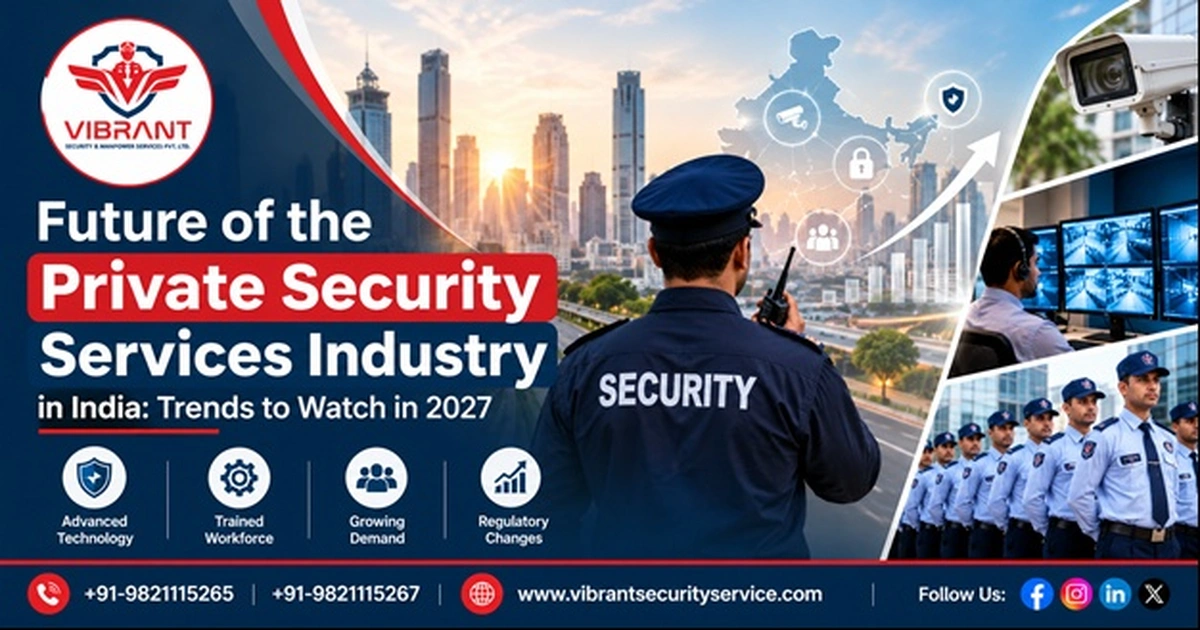
The private security services industry is expected to continue adapting to technology, workforce training, risk management, and integrated security operations. As businesses plan for 2027, understanding these developments can help them make better decisions when selecting and managing security service providers.
For organisations, the goal is not simply to arrange security personnel. It is to build a reliable security system that supports employees, protects property, manages access, and responds effectively to potential risks.
Understanding the Private Security Services Industry in India
The private security services industry includes businesses that provide trained security personnel and related security solutions to organizations and individuals. In the commercial sector, companies in the private security services industry offer manned guarding, access control, visitor management, industrial security, event security, and coordination with electronic surveillance systems.
Security requirements differ from one organisation to another. A corporate office may need visitor screening and reception security, while a manufacturing facility may require perimeter monitoring, vehicle checks, and restricted-area access control. Residential societies may prioritise entry verification and visitor records, whereas hotels need security arrangements that support guest safety without disrupting the customer experience.
This diversity is shaping the private security services industry in India. Businesses increasingly look for security providers that understand their operational environment rather than offering the same arrangement to every client.
Technology Will Play a Greater Role in Security Operations
Technology is changing how businesses monitor premises, manage entry points, and identify potential security concerns. In 2027, organisations should evaluate how digital tools can complement trained security personnel.
Important developments include:
CCTV surveillance:
Cameras can help monitor entrances, common areas, warehouses, and restricted zones.
Access control systems:
Digital access cards, biometric systems, and other authorised-entry mechanisms can help regulate access.
Visitor management:
Digital visitor records can improve documentation and make entry procedures more organised.
Centralized monitoring:
Where suitable, connected systems can help authorised teams monitor multiple locations.
Incident documentation:
Digital reporting tools can support more consistent records of incidents and security observations.
However, technology alone cannot replace every security function. Personnel are still needed to assess situations, communicate with visitors, manage unexpected incidents, and follow site-specific procedures.
The most practical approach is to combine suitable technology with trained personnel and clearly defined operating procedures.
Demand for Trained and Professional Security Personnel
A security guard’s responsibilities may include monitoring entry points, checking authorisation, maintaining visitor records, conducting patrols, and reporting unusual activity. These duties require more than physical presence, which is why the private security industry in India is placing greater emphasis on trained and professional personnel.
Businesses should look for personnel who receive role-appropriate training in communication, observation, emergency reporting, access control, and professional conduct.
The training requirements will depend on the location and nature of the assignment. Industrial sites, corporate offices, hotels, and residential complexes may each require different procedures.
For organisations hiring a security agency in the private security industry in India, important evaluation points include:
- Relevant training and experience
- Identity and background verification procedures
- Site-specific induction and instructions
- Attendance and replacement arrangements
- Incident escalation and reporting procedures
- Supervisory support and performance reviews
Professional training and effective supervision can help organisations maintain more consistent security operations, and they are among the clearest signs of a dependable provider in the private security industry in India.
Integrated Security Solutions for Businesses
Businesses often use several security measures simultaneously. For example, a commercial building may need security guards, CCTV surveillance, visitor management, access control, and emergency response procedures.
Managing these elements separately can create communication gaps if responsibilities are unclear. This is why integrated security is one of the most talked-about security industry trends in India.
An integrated security approach aims to coordinate personnel, equipment, reporting procedures, and escalation arrangements within a single operating framework. Many experts see this coordinated model as central to the future of private security services.
For example, a security guard monitoring a building entrance should understand the visitor authorisation process, know whom to contact when an entry request is disputed, and follow the established incident-reporting procedure.
Before selecting an integrated security provider, businesses should assess the provider’s ability to coordinate the services required at their particular site. Not every organisation needs every available technology or service, so it helps to follow security industry trends in India with a clear view of your own premises and requirements.
Industry-Specific Security Requirements Will Remain Important
Security arrangements must reflect the risks and working conditions of each facility. A standard deployment plan may not be suitable for every commercial environment.
Corporate Offices
Corporate offices may require reception security, visitor verification, employee access management, and monitoring of sensitive areas. Professional conduct is particularly important because security staff regularly interact with employees, visitors, and business partners.
Manufacturing Units and Industrial Facilities
Factories may need perimeter patrols, vehicle-entry checks, monitoring of material movement, and access restrictions for operational areas. Security procedures should align with the facility’s working hours, layout, and risk assessment.
Warehouses and Logistics Facilities
Warehouses may require entry and exit documentation, vehicle verification, inventory-area monitoring, and clear procedures for reporting suspicious activity.
Hotels and Hospitality Businesses
Hotels need security arrangements that protect guests, employees, and property while maintaining a welcoming environment. Staff training, discreet observation, access management, and emergency coordination can be important considerations.
Residential Societies
Residential communities may require visitor verification, delivery-entry procedures, vehicle management, and coordination with residents and facility managers.
As businesses plan for 2027, selecting a provider with relevant experience in the required environment can help create a more appropriate security arrangement.
Better Supervision, Reporting, and Accountability
Deploying security personnel is only one part of managing a security operation. Businesses also need to know whether assigned procedures are being followed and whether incidents are being reported correctly. Stronger supervision and accountability are among the most important security industry trends in India.
A well-managed security arrangement may include:
- Clearly documented post instructions
- Attendance and deployment records
- Regular supervisory visits
- Defined incident-reporting procedures
- Escalation contacts for emergencies
- Periodic performance reviews
Technology can support these activities through digital attendance, reporting applications, and other management tools where appropriate. This growing use of digital monitoring is shaping the future of private security services.
Businesses should discuss reporting frequency, supervisory responsibilities, replacement procedures, and service-level expectations with a prospective security provider before signing an agreement.
Clear accountability helps both parties understand their responsibilities and identify operational issues before they become recurring problems. For this reason, transparent reporting is becoming a standard expectation across the private security services industry.
Compliance and Responsible Security Management
Compliance will remain an essential consideration for organisations hiring private security services. Businesses should assess whether a provider meets the applicable legal and regulatory requirements for its services and operating locations.
Depending on the assignment, relevant considerations may include licensing requirements, personnel verification, employment documentation, wage obligations, training requirements, and other applicable labour and security regulations.
Businesses should also clarify the responsibilities of the service provider and the client under their agreement.
A responsible selection process should include reviewing relevant documentation, checking the provider’s experience, and understanding how personnel are recruited, deployed, supervised, and supported.
Because legal requirements can change and vary according to the circumstances, organisations should verify the current rules applicable to their location and contract rather than relying on assumptions.
Security Budgets Will Need to Focus on Value, Not Just Cost
When comparing security agencies in the private security services industry, the lowest quotation may not necessarily represent the best value.
Businesses choosing private security services in India should evaluate the proposed deployment, personnel training, supervision, reporting, replacement arrangements, and any technology included in the service.
A useful comparison should consider:
- Number and type of personnel proposed
- Scope of duties and working hours
- Training and supervision arrangements
- Applicable statutory and employment costs
- Equipment and technology requirements
- Emergency escalation and reporting
- Contract terms and service expectations
A clear scope of work makes quotations easier to compare and reduces the risk of misunderstandings after deployment. This focus on value over price is one of the notable security industry trends in India.
The objective should be to find a suitable balance between budget, operational requirements, service quality, and risk management, which is what a mature private security industry in India increasingly expects from both providers and clients.
How Businesses Can Prepare for Security Needs in 2027
Organisations can take practical steps now to review whether their existing arrangements are suitable for their premises and operations.
Step 1: Review current security arrangements:
Identify gaps in access control, surveillance, staffing, patrols, and incident reporting.
Step 2: Assess site-specific risks:
Consider the facility’s layout, operating hours, visitor traffic, valuable assets, and restricted areas.
Step 3: Define service requirements:
Document the number of personnel required, their responsibilities, supervisory arrangements, and any additional services needed.
Step 4: Evaluate potential security providers:
Review relevant experience, documentation, training processes, references, and service capabilities.
Step 5: Establish measurable expectations:
Agree on reporting procedures, attendance monitoring, incident escalation, and periodic performance reviews.
Step 6: Review performance regularly:
Reassess the arrangement when the facility expands, operating conditions change, or new risks emerge.
These steps can help businesses select security services based on their actual requirements rather than relying on a generic deployment model.
Why Choosing the Right Security Partner Matters
The effectiveness of a security arrangement depends on the people, procedures, supervision, and resources supporting it. In the private security services industry, a suitable security partner should understand the client’s operating environment, communicate clearly, and provide a service plan that reflects the site’s requirements.
Before choosing private security services in India, businesses should discuss their security objectives, expected duties, deployment requirements, reporting structure, and budget. They should also verify the provider’s credentials and relevant experience.
For organisations operating multiple facilities, consistent procedures and clear reporting can be particularly important. This focus on standardised, well-documented operations is one of the key security industry trends in India.
The right approach is to treat security as an ongoing operational responsibility rather than a one-time staffing decision. Businesses that take this view are better placed to benefit from a growing and more professional private security industry in India.
How Vibrant Security Supports Business Security Requirements
Vibrant Security & Manpower Services Pvt. Ltd. provides security and manpower solutions for business environments. Its service offerings include security guard services, corporate security, facility management, and related manpower support.
For organizations evaluating security arrangements, the appropriate service depends on the premises, operating requirements, and nature of the assignment.
Businesses considering a new security provider can discuss their site requirements, staffing needs, and service expectations with Vibrant Security to explore a suitable arrangement.
Whether the requirement involves a corporate office, industrial facility, warehouse, hotel, or residential society, a clear understanding of operational needs is an important starting point.
Also Read – How to Hire Professional Bouncers for Events, Hotels and Corporate Functions
Conclusion
The future of the private security services industry in India will involve more than increasing the number of security personnel. Technology adoption, professional training, industry-specific procedures, effective supervision, and responsible management will all remain important considerations.
As organisations prepare for 2027, they should review their current security arrangements, identify operational gaps, and choose service providers based on relevant experience and clearly defined responsibilities.
A well-planned security arrangement can help businesses manage access, improve incident reporting, and support a safer working environment.
Looking for professional security services for your business? Contact Vibrant Security & Manpower Services Pvt. Ltd. to discuss your security requirements and explore suitable security solutions.
Fill in the form below to share your security requirements with us.
Frequently Asked Questions(FAQs)
Q1. What is the private security services industry?
The private security services industry includes companies that provide security personnel and related services, such as manned guarding, access control, surveillance support, and site-specific security arrangements.
Q2. What are the key trends shaping the private security industry in India?
Important areas to watch include the use of surveillance technology, access control, professional training, integrated security operations, better reporting, and stronger operational accountability. The pace of adoption will vary across businesses and locations.
Q3. Will technology replace security guards in the future?
Technology can support monitoring and access management, but human personnel remain important for communication, situational judgement, physical presence, and responding to incidents. The appropriate balance depends on the site and its security requirements.
Q4. Which businesses need professional security services?
Corporate offices, manufacturing facilities, warehouses, hotels, commercial buildings, and residential societies may require professional security services depending on their premises, risks, and operating requirements.
Q5. How should a business choose a private security company?
Businesses should review the provider’s applicable licences and credentials, personnel verification and training processes, relevant experience, supervision, reporting procedures, deployment plan, and contract terms.
Q6. How can businesses prepare for security requirements in 2027?
They can review existing arrangements, assess site-specific risks, document staffing and operational requirements, evaluate service providers, and establish clear procedures for supervision, incident reporting, and performance reviews.
Q7. Does Vibrant Security provide security services for businesses?
Yes, Vibrant Security & Manpower Services Pvt. Ltd. provides professional security guard services, corporate security, facility management, and manpower solutions across Lucknow, Dehradun, Haridwar, and Delhi NCR, including Noida, Greater Noida, Ghaziabad, Indirapuram, Vaishali, Vasundhara, Greater Noida, Delhi, Faridabad, and Gurugram. Businesses can contact Vibrant Security to discuss their specific security requirements and confirm service availability at their location.


